
How a playable game is made out of a story you already have
/ The short version:
- A game is written, not drawn — it reuses the cast and the scenes your story already has.
- Two kinds today: an adventure of up to sixteen rooms, and a quiz of up to ten questions.
- One engine reads a specification; nothing is code-generated per game, so no game can break in a way another game does not.
- The result is a link you can send, not a file somebody has to install.
A game made this way generates no pictures at all, which sounds like a limitation and is the reason it works. By the time you make one, the hard visual work is done: you have a cast with approved renders and scenes with places and characters in them.
So a game is not another generation problem. What is actually undecided is where the choices go, what each one does, and which scene it leads to — and all of that is writing, not drawing.
That is worth saying because the obvious mental model is wrong. People expect making a game to be the biggest job of the three, because games are the biggest job everywhere else. Here it is the smallest, and it is the smallest because it inherits everything.
/ In this post:
Two kinds, and their limits
Both are deliberately finishable in a sitting. The limits below are not placeholders waiting to be raised: a generated game that runs for two hours is a generated game nobody completes, and a sixteen-room adventure somebody finishes is worth more than a hundred-room one they abandon.
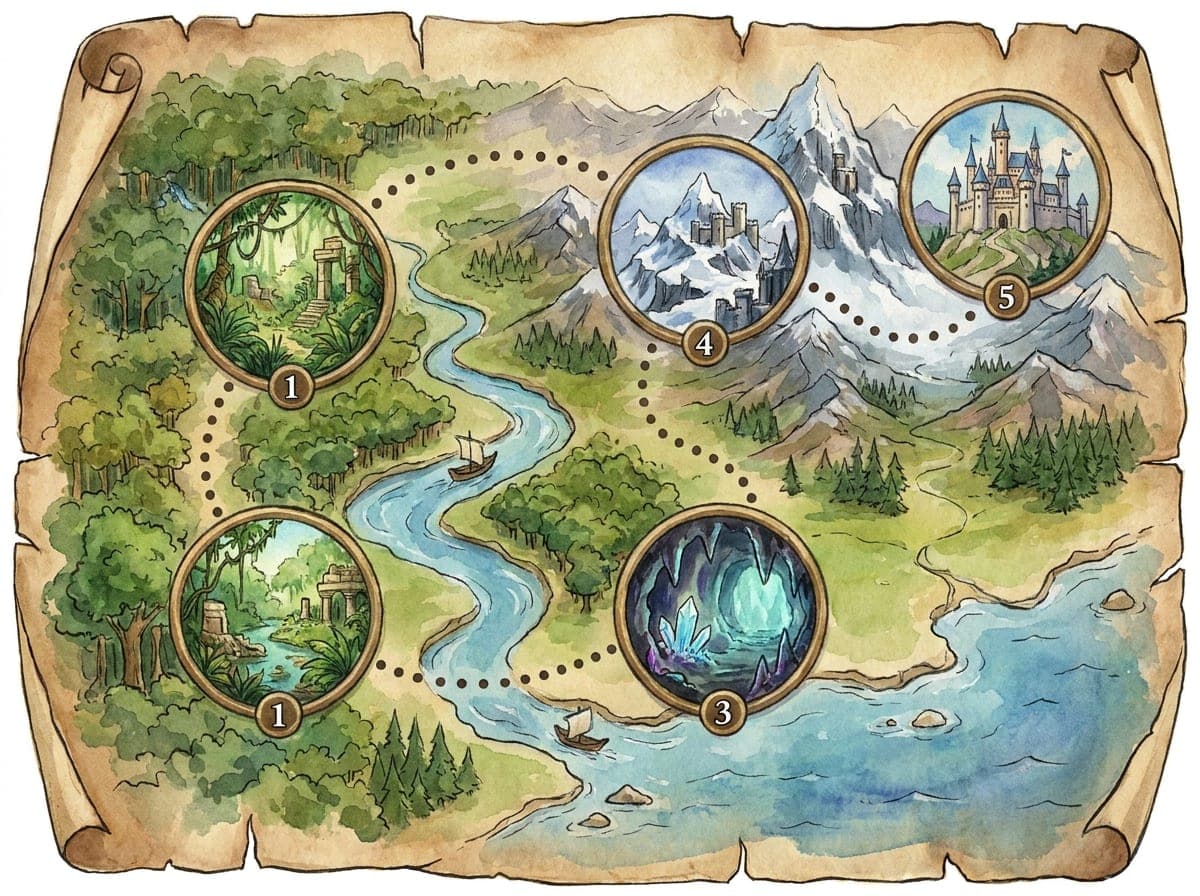
- Adventure — walk through the story scene by scene and choose what happens. Up to sixteen rooms, each with its own choices and where each one leads.
- Quiz — questions on the film you just made, with a score at the end. Up to ten questions.
A third kind is planned and is not here, which is worth saying plainly rather than leaving as an implication.
One engine, not generated code
This is the architectural decision that matters, and it runs against the obvious approach.
The obvious approach is to have a model write the game — actual code, per game, which then runs. It demos brilliantly and it fails in a specific way: every game is a fresh program, so every game has its own bugs, its own edge cases and its own ways of not working on a phone. You cannot fix any of them centrally, because there is no centre.
Here the model writes a specification — rooms, choices, where each choice leads, which cast member is in which scene — and a single engine reads it. Nothing is built per game. That means a rendering bug fixed once is fixed in every game that exists and every game anyone makes afterward, including the ones already shared.
It also means the spec is checkable. A room that points at a room that does not exist is a validation failure, not a dead end somebody discovers three choices into your game.
One engine reads the spec. Nothing is built per game, so nothing can break in a way only one game breaks.
The cast walks in from the film
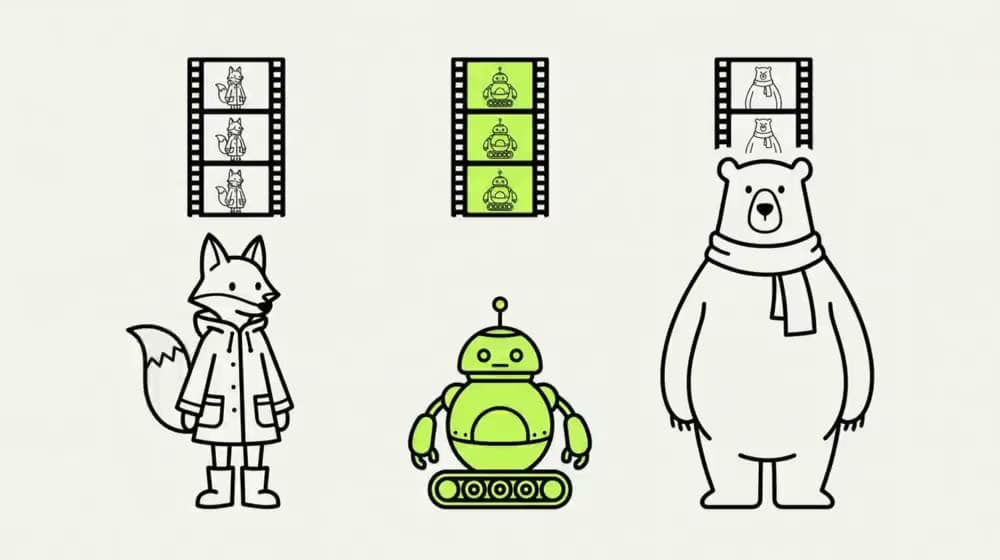
The characters in the game are the cast members you approved, using the renders that already exist. Nothing is drawn again, and nothing is re-imagined from a description — which is the same mechanism described in why the faces hold, applied to a different output.
This is why the order of operations is worth knowing. A game made after a film or a book inherits a cast that has already been looked at and approved. A game made first has to establish one, which is the same work wherever it happens.
What it is not
It is worth being clear about the ceiling. Sixteen rooms is a short adventure. Ten questions is a short quiz. There is no physics, no inventory, no combat and no save system, because none of those exist in the engine.
What it is good for is turning a story you already made into something a person can play through once and enjoy, in about the time it takes to read this post. That is a narrow thing to be good at, and it is genuinely good at it.
Questions
How do you turn a story into a playable game?
By writing a specification rather than generating anything new: the rooms, the choices in each, where each choice leads, and which cast member appears where. The characters and scenes already exist from the story, so nothing is drawn again.
What kinds of games can be made?
Two today: an adventure you walk through scene by scene, choosing what happens, with up to sixteen rooms; and a quiz on the film you made, with up to ten questions and a score at the end. A third kind is planned and does not exist yet.
Is the game code written by AI?
No. The model writes a specification — rooms, choices, where each leads, which character is in which scene — and one engine reads it. Nothing is generated per game, so a bug fixed once is fixed in every game including ones already shared, and a choice pointing at a room that does not exist is caught as a validation error rather than by a player.
How do people play the game I made?
By opening a link. The game is hosted and runs in a browser, so sharing it means sending a URL rather than a file and installation instructions.