
How a storybook is made, and what a printer will accept
/ The short version:
- A book reuses the film's cast and beats; the pictures are new but the characters are not re-invented.
- Six page layouts, and only one of them — the spread — needs a new picture to change into.
- Print is 300 dpi with an eighth of an inch of bleed on every edge, and the page count must be a multiple of four.
- The first press writes every page and draws page one, so you can see a real page at the real trim before committing to the rest.
A storybook is not a film with the motion taken out. It is a different object with different rules, and most of the rules come from the printer rather than from us. What it shares with the film is the part that took the work: the cast, the beats and the look.
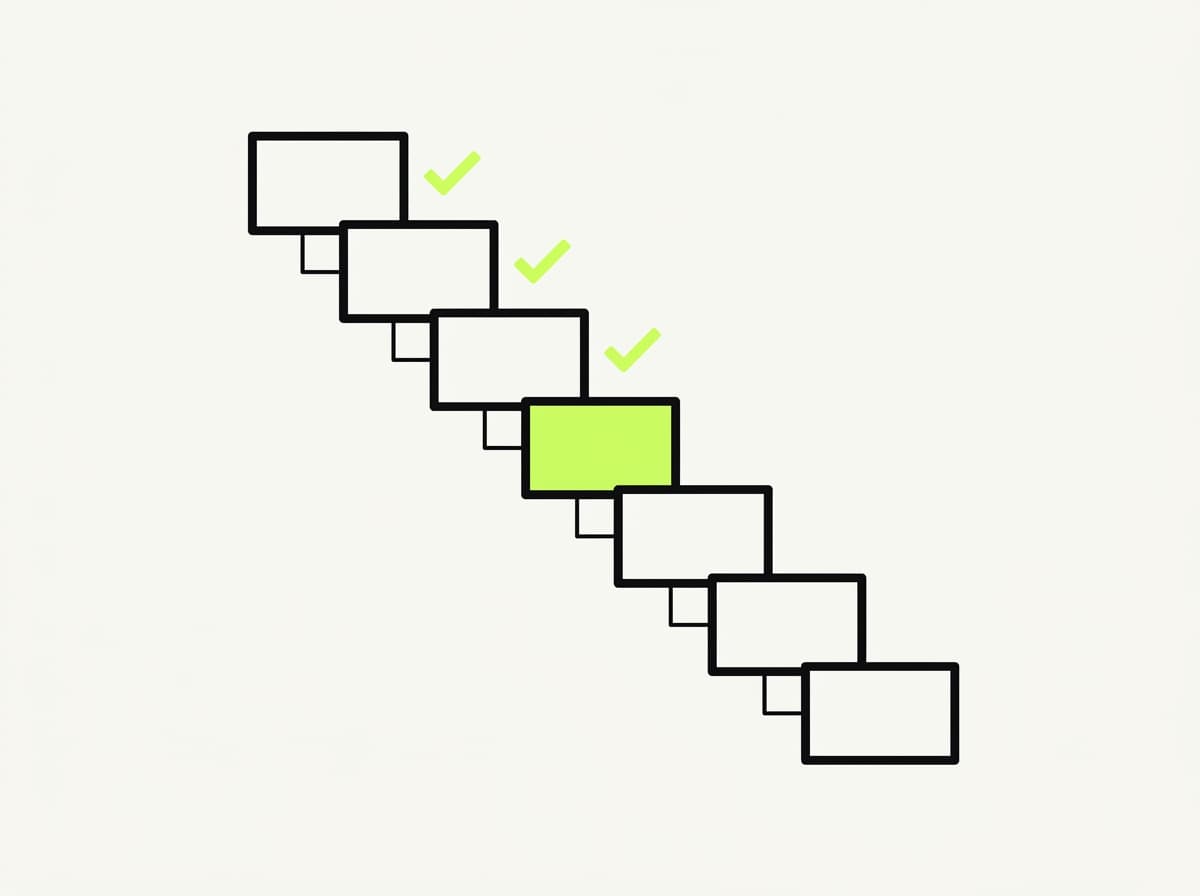
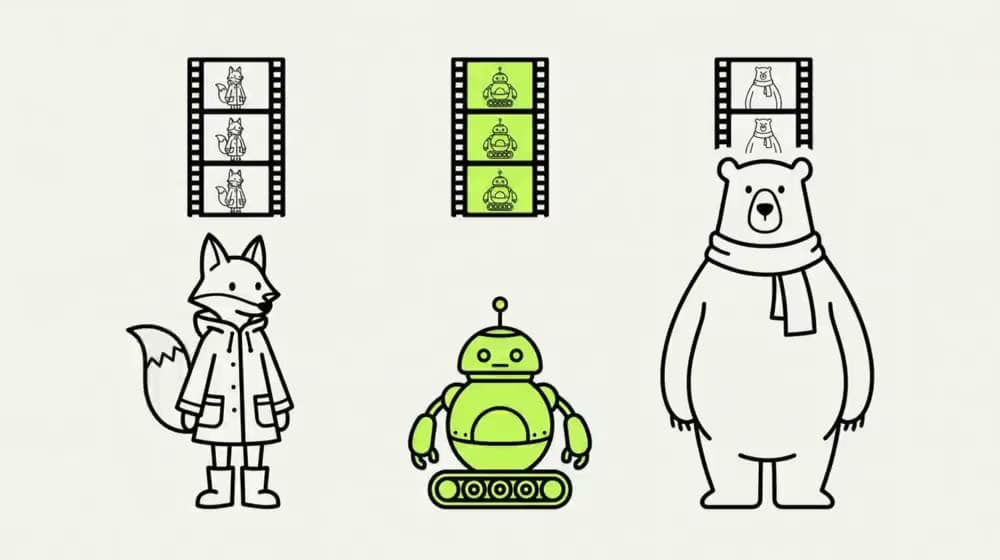
The first five stages of the pipeline — storyline, treatment, cast, board, sound — produce a story with characters and scenes. A film is one thing you can do with that. A book is another, and it starts from the same place rather than from scratch. The characters in your book are the characters you already approved, for the reasons in why the faces hold.
/ In this post:
Two passes: the words, then the pictures
A book is built in two passes, and they are separate on purpose.
- The text pass — trims the story down to page text. Writing for a page is not writing for narration — a spoken line that runs six seconds is far too long under a picture, and the rhythm of a turned page is not the rhythm of a cut.
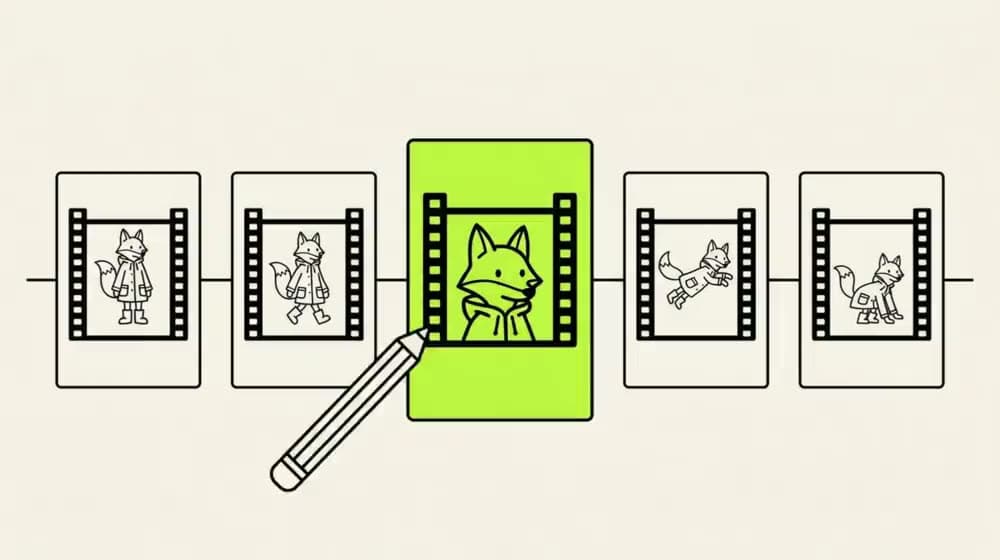
- The picture pass — fills in the page pictures, one at a time. Because they are produced individually rather than as a batch, a single page can be drawn and looked at before the other thirty-nine are.
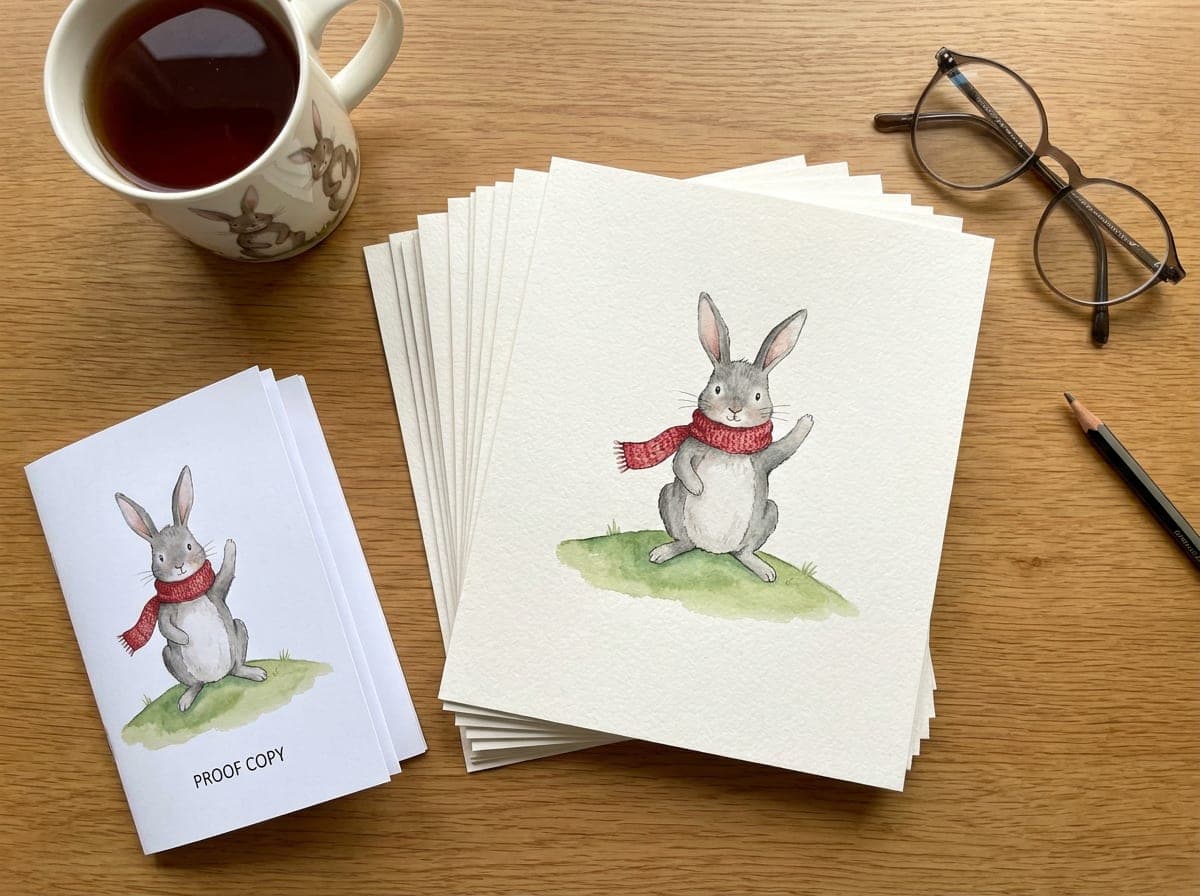
The proof is the point of that split. The first press writes the words for every page and draws page one, so you can look at an actual page — the type on the actual picture, at the actual trim — before committing to the rest.
Six layouts, and only one of them is expensive
Every page has a layout, and the layout is not decoration: it changes what the picture has to be. A picture with words over the bottom of it needs a quiet area at the bottom. A vignette needs to fade to white at the edges. These are composition instructions passed to the generation, not crops applied afterward.
- Picture over words — the workhorse. A calm composition with clear room at the bottom for a line or two of type.
- Full bleed — picture to every edge with words over it, which needs one quiet area of low detail where white type can sit.
- Vignette — close and intimate, fading softly to plain white at the edges. A change of pace.
- Spot — one small thing on a white field. A beat of rest, and the layout most books do not use enough.
- Wordless — no type at all. Worth more than it sounds — a wordless page is how a picture book slows down.
- Spread — one picture across both pages. The only layout that needs a new picture to change into, because a spread is a different shape from a single page and cannot be made by re-arranging one.
Every layout except the spread is a different arrangement of a picture you already have, so switching between them needs nothing drawn again. A spread does, because its shape is different.
What a printer will actually accept
This is where a generated book usually falls over, and the constraints are not negotiable.
| Constraint | Value | Why |
|---|---|---|
| Resolution | 300 dpi | below this the print is visibly soft; screens lie about this |
| Bleed | 0.125 in on every edge | the trim wanders, and white slivers show where it does |
| Trim sizes | 8.5 × 8.5 in / 8 × 10 in | what the vendor offers in a shape that suits a picture book |
| Page count | a multiple of four | sheets are folded; a count that is not a multiple of four is refused |
| Length | 24 to 96 pages | the binding's own minimum and maximum |
The multiple-of-four rule is the one that bites. A book is printed on folded sheets, and a folded sheet is four pages. A forty-two page book is not a slightly awkward book, it is a book the printer will not take. Spreads make this easy to get wrong, because a spread is one picture occupying two page slots and it is easy to count it as one.
A page count that is not a multiple of four is a book the printer refuses.
The detail that catches people out
The spine. Its thickness is calculated from the page count and the caliper of the paper, because a cover printed for the wrong spine width is a cover with the title wrapped around the edge — and you do not find that out until the box arrives.
It is calculated rather than estimated, and it is recalculated when the page count changes. A book that gains four pages is a book with a thicker spine, and the cover has to know.
And the same story can be played
A book and a film are two endings for the same first five stages. So is a playable game, which takes the same cast and the same scenes and puts choices in them. None of the three re-invents the characters, because the characters belong to the project.
Questions
Can an AI-generated storybook actually be printed?
Yes, and the constraints are real ones from the print vendor: 300 dpi, an eighth of an inch of bleed on every edge, a trim of 8.5 by 8.5 inches or 8 by 10, between 24 and 96 pages, and a page count that is a multiple of four. A count that is not a multiple of four is refused, because sheets are folded and a folded sheet is four pages.
What bindings and sizes are available?
Softcover or hardcover, in a square 8.5 by 8.5 inch trim or a portrait 8 by 10, between 24 and 96 pages, up to ten copies in an order. The spine width is calculated from the page count and the paper thickness, so a book that gains pages gets a cover that fits it.
Can I see a page before paying for the whole book?
Yes. The first press writes the words for every page and draws page one, so you can look at a real page — the type on the real picture, at the real trim — before committing to the rest.
Do the characters in the book match the ones in the film?
Yes. A book is built from the same cast records the film uses, so the characters are the ones you already approved rather than new ones generated from the same description.