Seven stages, and you approve every one
/ The short version:
- A film is made in seven stages, and six of them are text or stills. The one that produces footage runs last.
- Everything you might change your mind about is reachable while it is still a sentence, because a sentence is the easiest thing in the world to change.
- You can go from one line to a finished, readable storyboard — every shot, every camera move — before committing to anything.
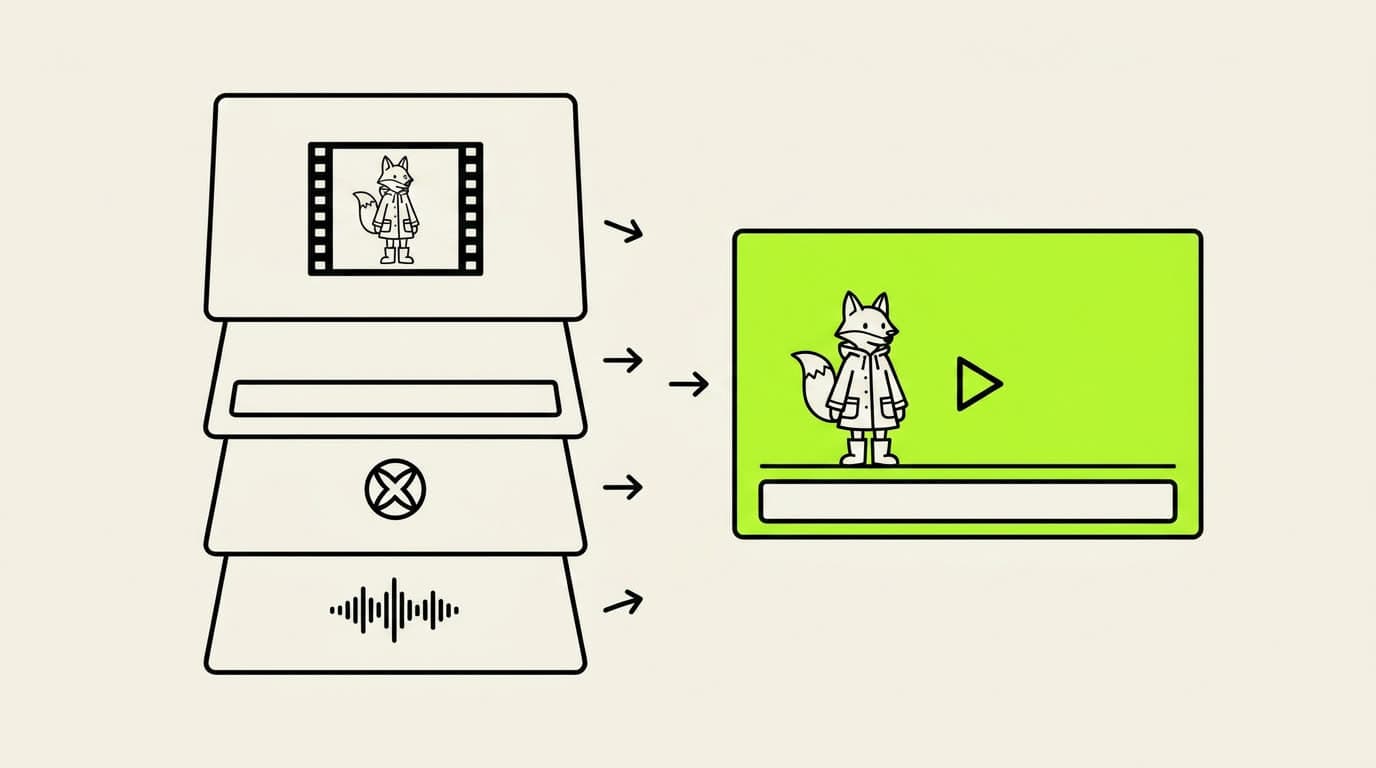
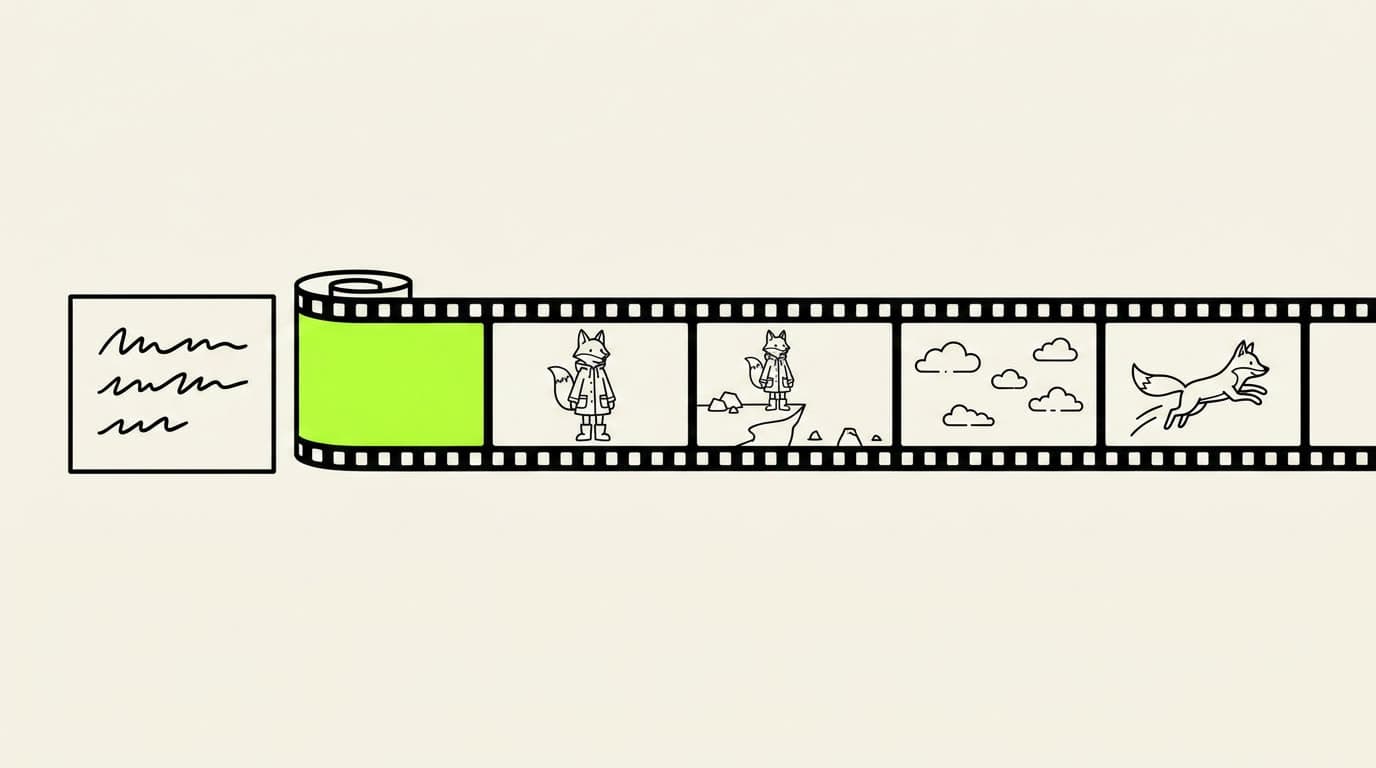
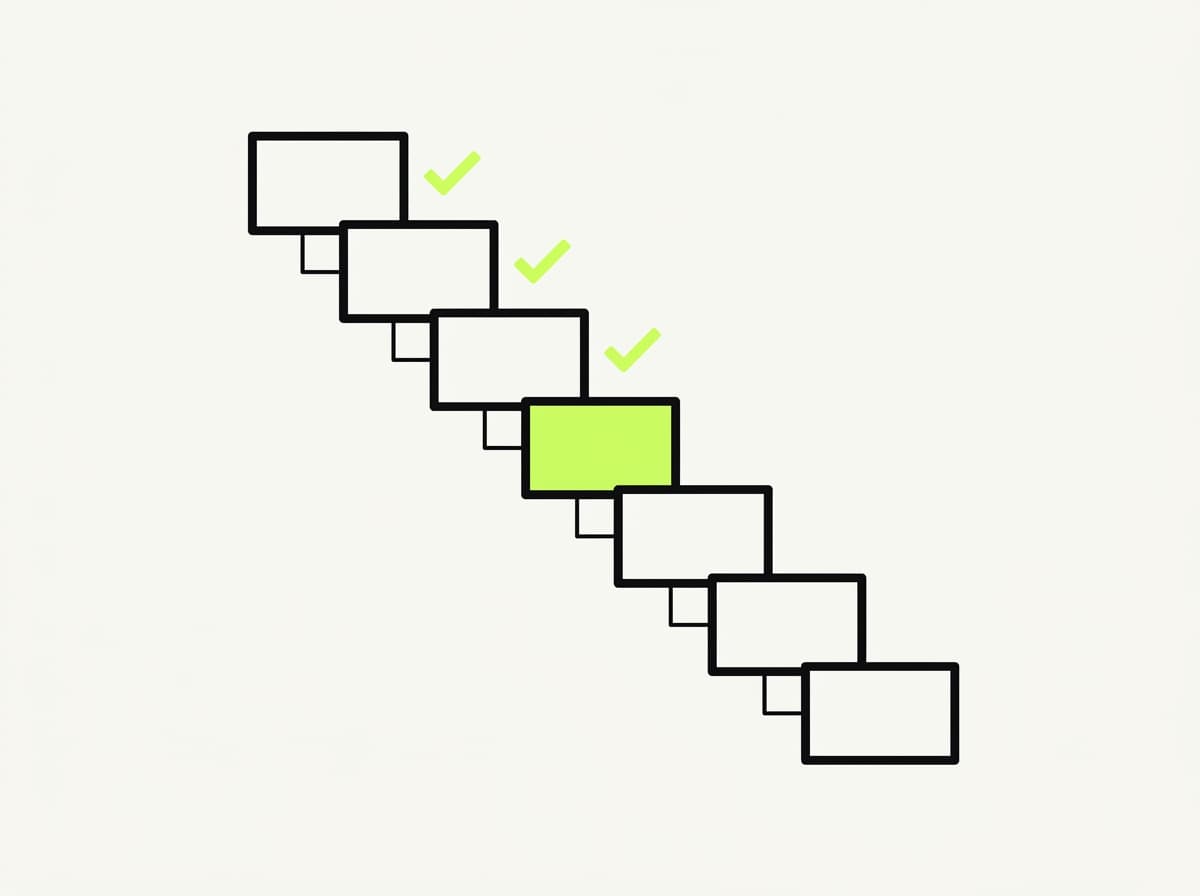
A film made from one sentence is not one operation. It is seven, and six of them are made of words and stills. The one that produces footage runs last, deliberately — after you have read the story in prose, chosen the cast, and looked at every shot written down.
The usual shape of a generative video tool is a box, a button and a wait. You describe something, the machine goes away, and some minutes later you are handed a finished film. If it is wrong — and it is usually wrong in one specific, identifiable way — your options are to accept it or to press the button again and make the whole thing afresh, including the eleven seconds that were fine.
That shape is not a limitation of the models. It is a decision about where the human sits, and it puts them at the end, where their only remaining power is to reject the whole thing. This pipeline puts them in seven places, all of them before the money is spent.
/ In this post:
Why the order is the whole design
The three materials the pipeline works in are not interchangeable. Words are instant to make and instant to change. A still takes a moment and can be looked at and rejected in a second. Footage takes real time to produce and, once it exists, is the one thing in the process you cannot meaningfully edit — you can only make it again.
| Material | How long it takes to make | How hard it is to change |
|---|---|---|
| Words | seconds | type over them, or ask in a sentence |
| A still | a moment | look at it, reject it, choose another |
| Footage | minutes | not editable — only re-filmable |
That asymmetry is the entire argument for the order of the stages. Every decision you might change your mind about should be reachable while it is still a sentence, because a sentence is the easiest thing in the world to change and a finished shot is one of the hardest.
The easiest place to disagree with a film is while it is still a paragraph.
The seven stages, in order
- The storyline — One sentence, or a script you paste word for word. You choose the shape here — 16:9, 9:16, 1:1, 4:3 or 3:4 — and the language, from twelve. Bring a document, a link or up to six product photos and they are treated as ground truth rather than as inspiration.
- The treatment — The whole film in prose, beat by beat, before a frame exists. Read it, type over it, or say what to change in a sentence. Rebuilding all of it takes seconds. See the easiest place to disagree for why this stage earns its place.
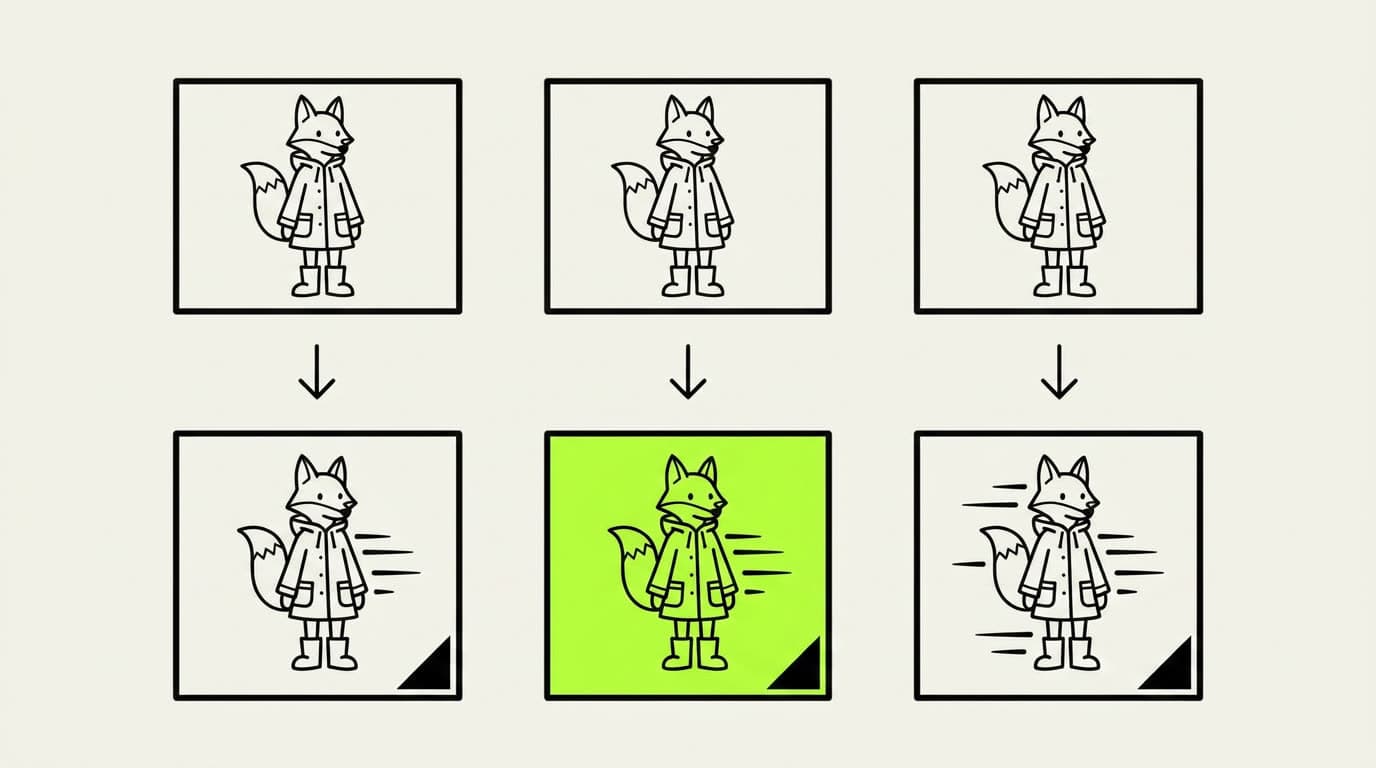
- The cast — Characters are pulled out of the story as first-class objects, given a written look you can lock, and approved as a picture. That picture is what every later shot is filmed from, which is why the faces hold.
- The storyboard — Every shot with its narration, its dialogue, what we see, what we hear, its camera move, its framing and its length. Change one card and only that card goes stale. What a storyboard card holds goes through the fields.
- The sound — A narrator, characters with voices of their own, twelve languages, sound effects written down per scene, and a score that ducks under anyone speaking. Or your own voice, cloned. Voices, languages and a song.
- The filming — Each shot is filmed from a still you already approved. They run at once rather than in a queue, and one failure retries alone. This is the stage that produces something you cannot edit afterward, and it is sixth of seven for that reason.
- The cut — Assembled with captions taken from the real word timings, your logo, titles composited rather than generated, and the score mixed under the dialogue. Why your titles read as typed.
What approval actually means here
The word gets used loosely. In a lot of products it means a confirmation dialog on an action you cannot inspect beforehand and cannot undo afterward. Three things make it mean something more than that here.
- Every stage is readable before it runs — not a progress bar and not a summary. The treatment is prose you can read; the storyboard is cards you can read; the cast is pictures you can look at.
- Nothing proceeds on its own — the pipeline stops and waits at each of the seven, rather than running to the end and presenting you with a result to accept or reject.
- Planning is complete before anything is filmed — you can go from one sentence to a finished storyboard — every shot, every line of narration, every camera move — and know exactly what the film will be before it exists.
The decision that shapes the film most
It is not the quality setting and it is not the resolution. It is how many shots you cut the minute into, and it is a choice you make on the storyboard, in text, before anything is filmed.
Six long takes and twenty-four quick cuts are the same sixty seconds and are not remotely the same film. Long takes hold on one idea and let a performance breathe. Quick cuts build rhythm and carry more information per second. Most people arrive with a length in mind and no opinion about this at all, and it is the one thing most worth having an opinion about. What happens when a shot comes out wrong covers the other half of it — what changing your mind afterward actually involves.
The same seven stages, three endings
A film is the longest path through the pipeline, but not the only one. The first five stages — storyline, treatment, cast, board, sound — produce a story with characters, scenes and a look. From there it can be filmed, printed or played.
A storybook takes the same cast and the same beats and lays them out as pages at print resolution. A playable game takes the same rooms and the same characters and turns them into something with choices in it. Neither re-invents the cast, because the cast is a thing the project owns rather than a thing each output generates for itself.
Questions
What are the stages of AI video generation?
Seven: the storyline, the treatment, the cast, the storyboard, the sound, the filming and the cut. Six of them produce words or stills you can read and change. Only the sixth produces footage, and it runs late on purpose, because footage is the one material in the process that cannot be edited afterward — only made again.
Can I see what the film will be before it is made?
Yes, in full. The storyline, the treatment, the cast renders and the complete storyboard — every shot with its narration, camera move, framing and length — all exist and are readable before anything is filmed.
What happens if I change the story after the film is made?
The console marks exactly which shots went stale — the ones whose cards changed — and asks you to confirm before re-filming them. The shots you did not touch keep their existing takes.
Can I paste in a script instead of writing a prompt?
Yes. A pasted script is used as written rather than rewritten, and the treatment stage is skipped. No stage in the pipeline is compulsory just because it exists.