
Three assistants, and what each one is not allowed to do
/ The short version:
- Each assistant lives inside one stage and cannot reach into another.
- The Scene Director snapshots every scene it touches before changing it, so any edit can be undone.
- The Bumper Assistant will not fire anything that produces new footage without an explicit yes in the conversation.
- The Final Cut Assistant can explain and re-assemble, and has no other powers at all.
An assistant that can do anything is an assistant you cannot leave alone with your work. There are three here, each living inside the step it belongs to, and each deliberately unable to reach outside it.
The industry default runs the other way: one assistant with access to everything, and a system prompt asking it nicely to be careful. That is a design where your confidence in the tool has to be rebuilt from scratch every time you type into it, because the blast radius of any instruction is the whole project.
/ In this post:
The Scene Director
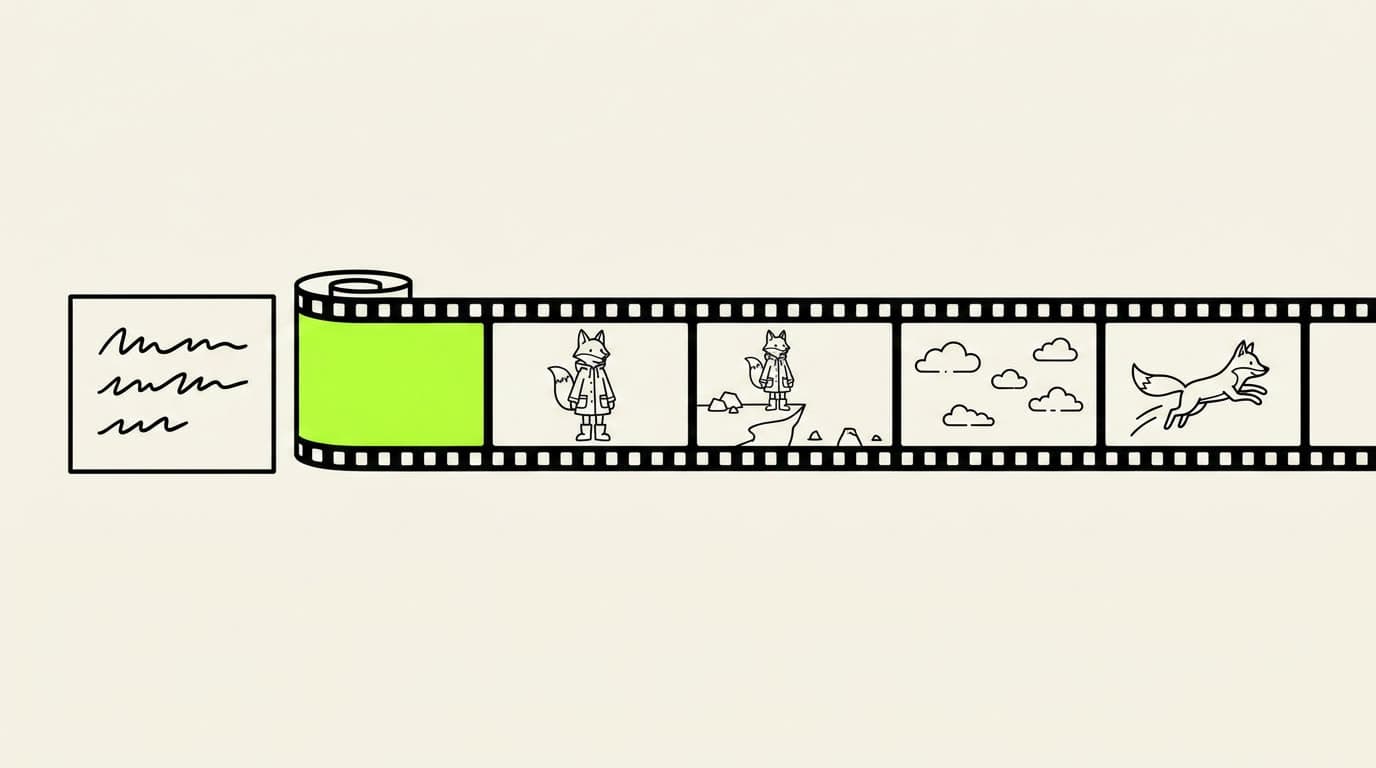
Lives on the storyboard. Tell it what to change in plain words, about one scene or about the whole film — “in scene five make the rocket red; in four and nine add Saturn” — and it makes the change.
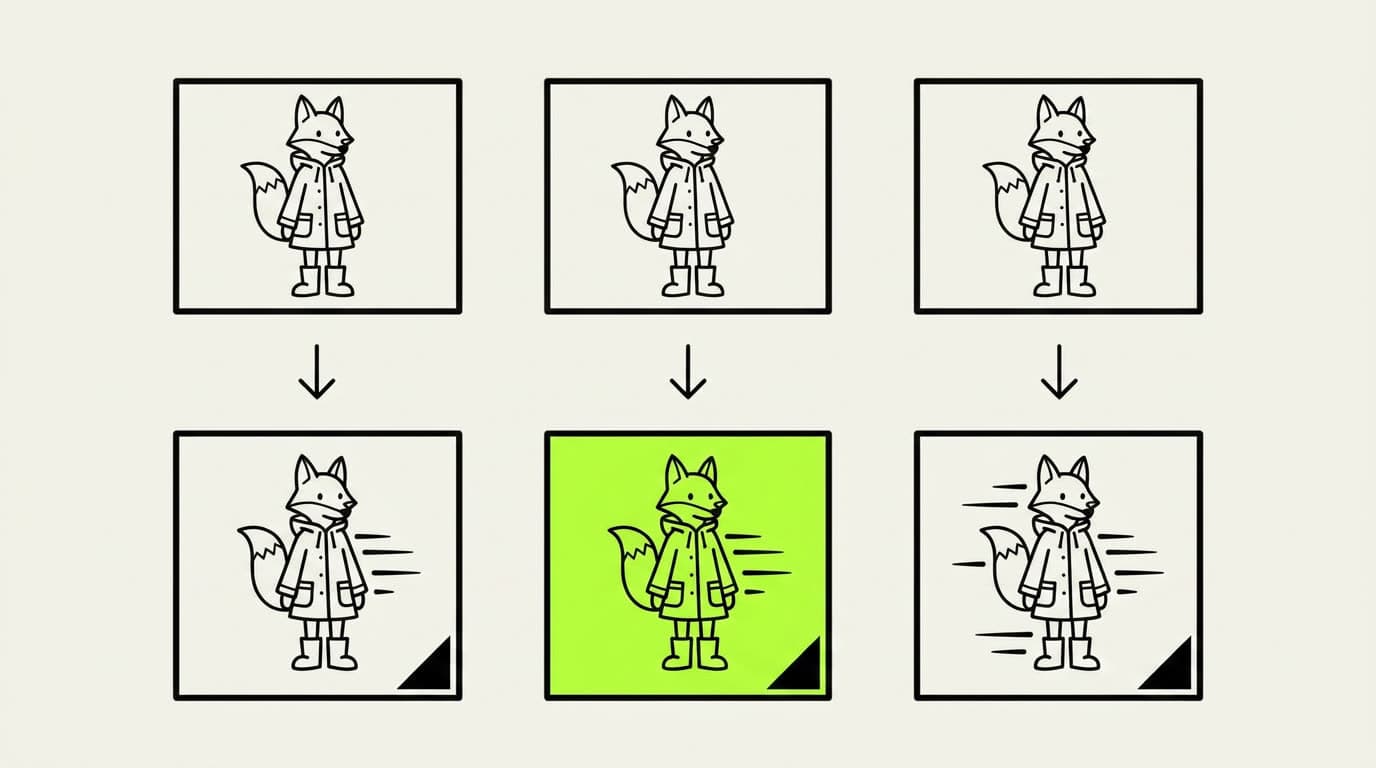
The important part is what it does first. Every scene it touches is snapshotted before it is modified, so any of them can be put back. That is not a general undo bolted on at the end; it is the assistant recording its own blast radius as it goes. If it misreads you and edits scene four when you meant scene fourteen, scene four is recoverable.
The Bumper Assistant
Lives on the intro and outro. The direction, the greeting and the lengths change instantly, because they are text and settings rather than footage.
Re-filming a bumper generates new footage, so it is only fired after you say yes to it in the conversation. The rule is simple and absolute: anything reversible happens immediately; anything that produces footage asks first, in the chat, in the same words you were already using.
This is the split worth copying. Most assistants make no distinction between an action that is instant and reversible and one that is neither, which leaves the user to keep track of which is which.
The Final Cut Assistant
Lives on the final cut, and is deliberately the narrowest of the three. It explains what state the assembly is in and it can put the film back together. That is the complete list.
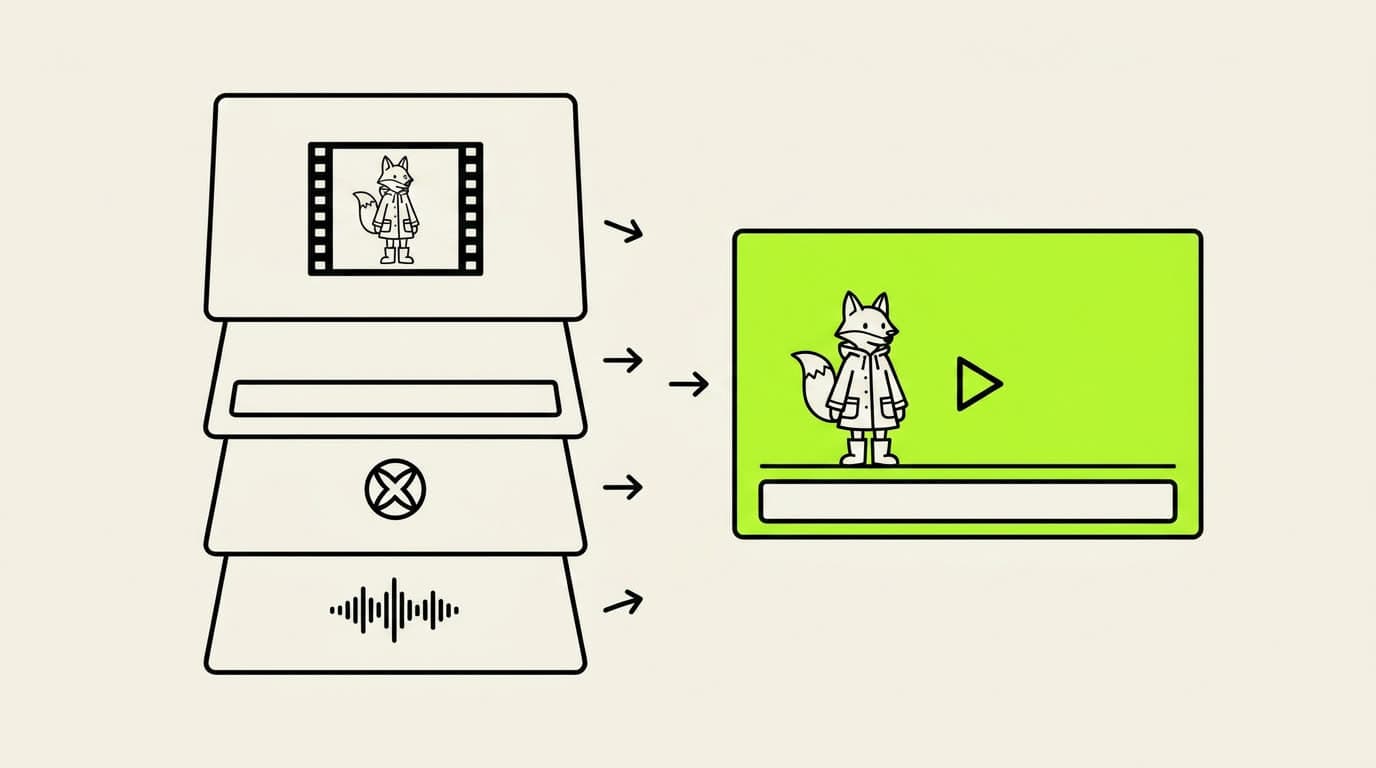
It can re-assemble without asking because assembly generates nothing — it composites frames that already exist. See why your titles read as typed for why that is true.
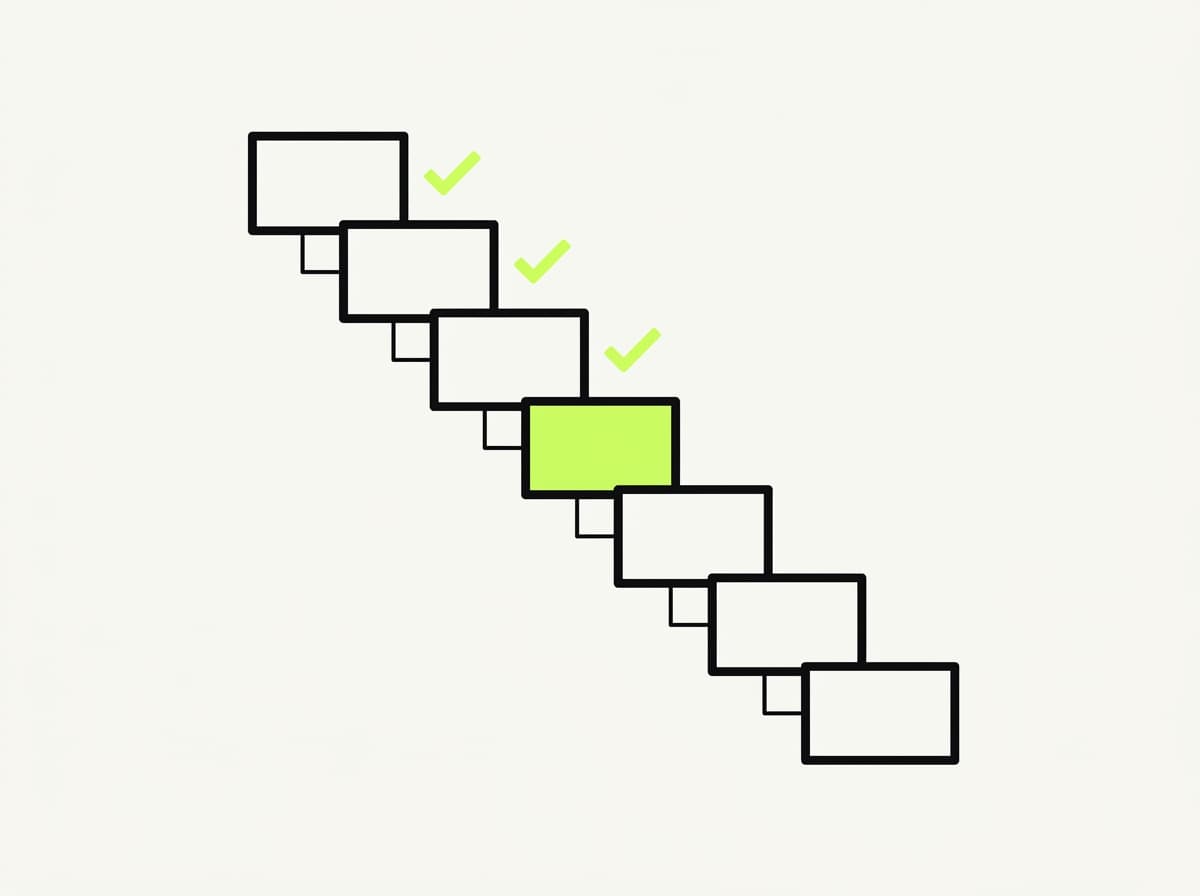
It cannot edit your storyboard. Not because it would be hard to let it, but because edits belong to the step that owns them, and an assistant on the last screen quietly reaching back into the fourth one is exactly the behaviour that makes people stop trusting a tool.
Edits belong to the step that owns them.
Why draw the lines this tightly
Because the value of an assistant is not its capability, it is your willingness to use it without reading every output defensively. Those two things trade against each other, and past a certain point capability makes the tool worse.
Knowing that the Final Cut Assistant has no powers over your storyboard is worth more than it being able to help there. You can type into it carelessly, which means you can type into it at all.
| Assistant | Can | Cannot |
|---|---|---|
| Scene Director | Edit any scene, in plain words, snapshotting each one first | Film anything without you confirming it |
| Bumper Assistant | Change direction, greeting and lengths instantly | Produce footage without an explicit yes in the chat |
| Final Cut Assistant | Explain the assembly state, and re-assemble | Touch the storyboard, the cast, or anything generative |
Questions
Can the AI assistant change my project without asking?
Only in ways that are reversible. The Scene Director edits scenes but snapshots every one it touches first, so any change can be put back. The Bumper Assistant changes text and settings instantly but will not produce new footage without an explicit yes in the conversation.
Why can't one assistant do everything?
Because the usefulness of an assistant depends on your willingness to type into it without reading every output defensively, and that falls as its blast radius grows. Knowing the final-cut assistant cannot reach into your storyboard is worth more than it being able to help there.
Can an assistant edit a different stage than the one it is on?
No, and that is deliberate. The final-cut assistant cannot reach into the storyboard, and the scene director does not touch the assembly. Edits belong to the step that owns them, because an assistant on the last screen quietly reaching back into the fourth one is the behaviour that makes people stop trusting a tool.