
What happens when a shot comes out wrong
/ The short version:
- The unit of work is a shot, so the unit of regret is a shot.
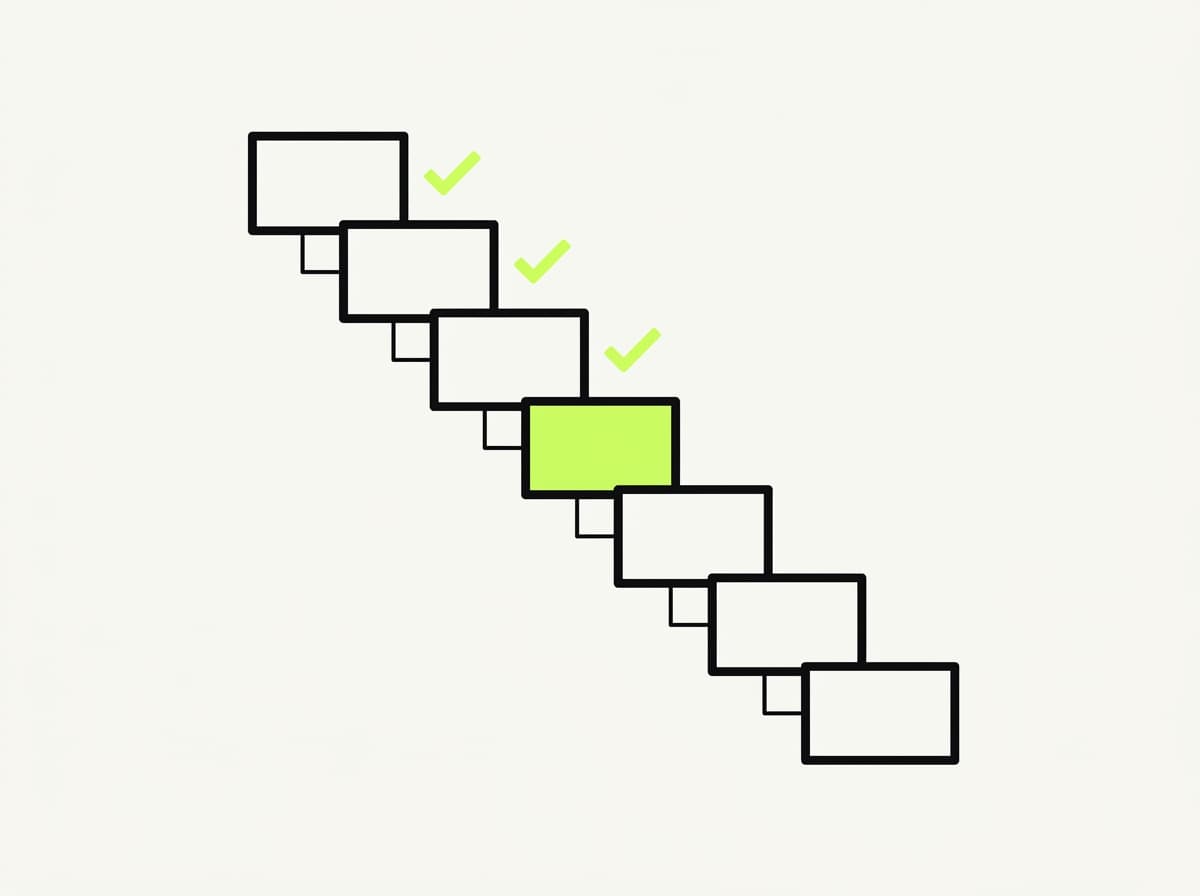
- Shots run at once rather than in a queue, and one failure retries alone.
- A crashed process resumes polling the existing job rather than abandoning it and starting a second one.
- Every change is a version, and any earlier cut can be brought back.
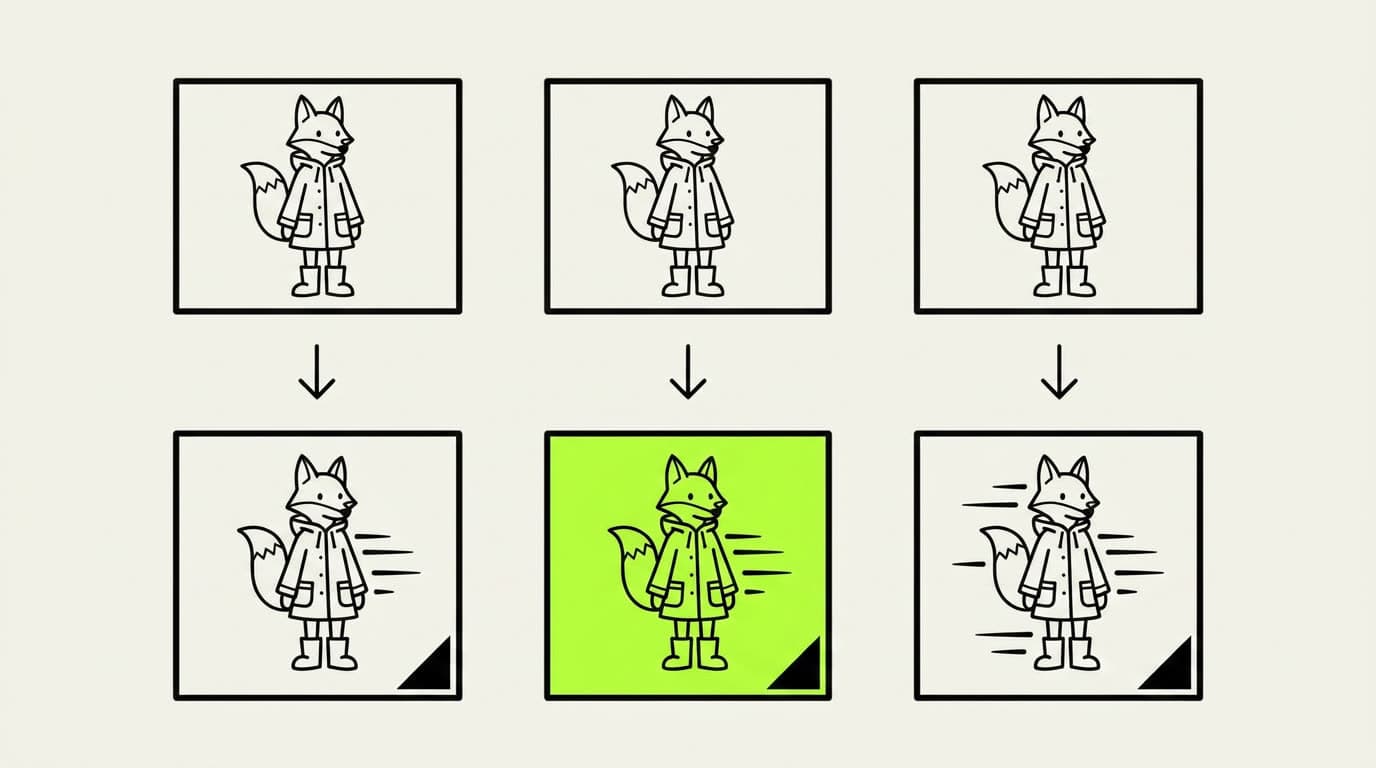
Something will come out wrong. The question is not whether, it is how much of your work it takes with it. In a tool that regenerates the whole film, the answer is the whole film. Here it is one shot.
This is the least glamorous property of the pipeline and probably the one that decides whether you keep using it. Generative output has a hit rate. Everything else in the design follows from taking that seriously rather than hoping for a model good enough that it stops mattering.
/ In this post:
Shots are separate things
Each shot is filmed from a still you approved, and each runs on its own. They go at once rather than one after another, so a fourteen-shot film does not take fourteen times as long as a one-shot film. And one failure retries alone rather than taking the batch down with it.
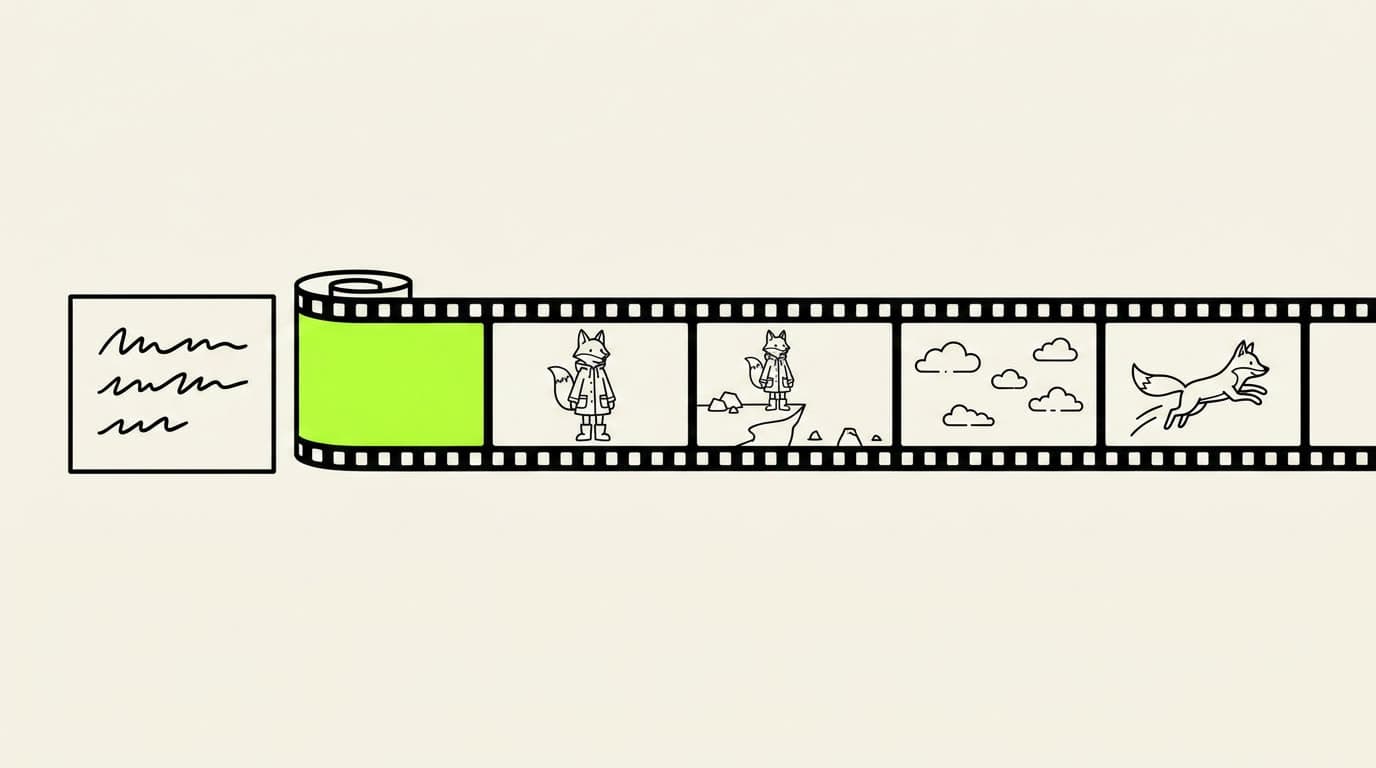
When you re-film a shot because you do not like it, the other thirteen keep their takes untouched. That sentence is the entire difference, and it only works because the storyboard is a list of cards rather than one prompt — see what a storyboard card holds.
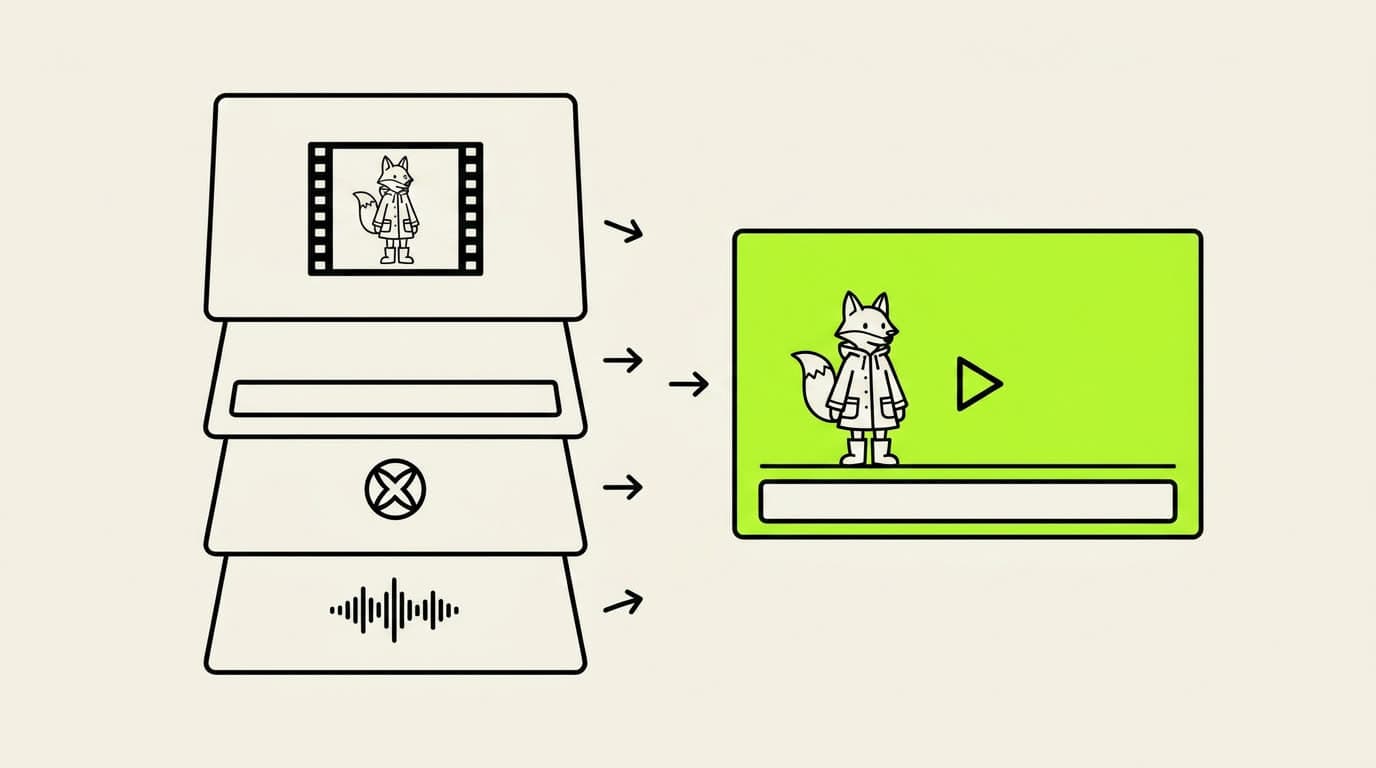
- Frames first, film second — you approve the still; filming animates that exact image. A still arrives in a moment and a clip takes minutes, so this ordering means most bad shots are caught and rejected before anything is filmed at all.
- Six looks — auto, clean and light, dark glass, bold color, editorial, isometric 3D.
- Six engines to choose from — the frame is not locked to one model, and they differ in what they are good at rather than only in quality.
- Continuity between shots — the last frame of one shot seeds the next, so the light and the place carry across the cut.
- A crash does not duplicate the render — the job handle is kept, so a restart resumes polling the render already running instead of starting another.
The part nobody advertises
That last line deserves its own section, because it is the kind of plumbing nobody puts on a feature list and everybody notices when it is missing.
A render is a long-running job on somebody else's infrastructure. You start it, you get a handle, you poll the handle until it finishes. If the process doing the polling dies — a deploy, a timeout, a crash — a naive implementation starts the render again. The first job is still running, and its result is simply thrown away.
Keeping the job handle means a restart picks the existing job back up rather than duplicating it. It is unglamorous, and it is the difference between a deploy in the middle of your render being an event and being a non-event.
Change the story later and the console tells you exactly which shots went stale, and asks before it re-films any of them.
Changing your mind after the fact
Editing the story after the film exists is the case that separates a real pipeline from a demo. Three things have to happen and all three are visible.
- The affected shots are identified — not all of them, and not guessed. A card that changed makes its own clip stale; cards you did not touch stay as they are.
- You are asked — before anything is re-filmed, with the affected shots named. Not afterward, and not as a summary once it has happened.
- You decide — and a film that is half re-filmed is a perfectly valid state to leave it in. Nothing is forced on you for the sake of tidiness.
And you can go back
Every change is a version. The storyboard, the lyrics and the film all keep their history, and any earlier cut can be brought back. Nothing you approved is destroyed by something you tried afterward.
This is the same versioning that protects a cast look from a later edit — see why the faces hold — and it is the reason the Scene Director can be allowed to edit scenes at all.
Questions
Can I regenerate just one shot in an AI video?
Yes, and that is the intended unit of work. Re-filming one shot leaves the others completely untouched, because the storyboard is a list of cards rather than a single prompt for the whole film.
What happens if a render crashes halfway?
The job handle is kept, so a restart resumes polling the existing job rather than starting a second one. Without that, a crashed process abandons a render that is still running and begins a duplicate of it.
Do shots render one at a time?
No, they run concurrently, so a fourteen-shot film does not take fourteen times as long as a one-shot film. A single failure retries on its own rather than failing the batch.
Can I go back to an earlier version of a film?
Yes. Every change is a version — the storyboard, the lyrics and the film all keep their history — and any earlier cut can be restored.